


- In-House Lab
In-House Lab in Tampa: One Visit, One Location for Your Bloodwork
Our In-House Lab lets us draw your blood in the same room where we just talked about your symptoms. You don’t drive to a second building, sit in a second waiting room, or explain your history twice. One visit, one team, and results that come back to the person who already knows your chart. When your doctor orders diagnostic testing to evaluate symptoms or monitor a treatment plan, having diagnostic services on-site streamlines your care.
- On-Site Diagnostic Testing
- Streamlined Clinical Visits
- Convenient Tampa Location
In-House Lab Testing Means Fewer Appointments for Tampa Patients
Here’s the old way. You come in, we talk, we hand you a paper order. Then you drive somewhere else, wait, get stuck, and go home. A week later somebody you’ve never met calls with a number and no context. We see how much that wears people down, it’s the number one reason folks skip the blood work their doctor asked for.
With the In-House Lab, the draw happens right here on N Himes Ave. Same chair. Same staff. And because we’re a single-location family-owned clinic, the sample doesn’t get lost in some giant routing system – it goes where it’s supposed to go.
That matters more than it sounds. Tampa’s summer heat and hurricane-season road closures turn a simple errand into a half-day project. A lot of patients on Himes and Hillsborough are already juggling work and school pickup. Cutting one trip out of the process is sometimes the difference between getting tested and not getting tested at all.
There’s a clinical side too. When your results land with the same clinician who examined you, the conversation starts at step two. No re-explaining the dizziness. No guessing which medication you’re on. We already know, so we can talk about what the numbers mean for you specifically. Our team speaks English, Spanish, and Portuguese, so that conversation happens in the language you think in.
Ever left a lab wondering if anyone would even call you back? That’s the gap we built this around.
Which Visits Usually Include On-Site Lab Work
Most folks don’t book a visit thinking about blood work. They come in because something feels off, or because a form needs signing. Then the lab part comes up. Here’s where it happens most often in our clinic.
- Annual physical exams and wellness exams, where blood work covers the basics your doctor tracks year over year
- Chronic disease management visits for diabetes, high blood pressure, or thyroid conditions, since these need numbers, not guesses
- DOT physical card appointments, where the paperwork can't move forward until certain results are in hand
- School physicals and health screenings, usually scheduled tight against a deadline
- STD testing and COVID-19 testing, where waiting days for an answer is the hardest part
- Weight management and hormone therapy visits, which depend on lab values to set a starting point
Allergy testing belongs on that list too. So does EKG and ECG testing, which isn’t blood work but runs the same way – done here, read here, discussed before you leave. Car accident rehabilitation patients often need baseline labs early on, and those results shape what the rehab plan looks like in week one instead of week three.
We see this every single week. Someone walks in with a DOT form due Friday, already worried they’ll miss a route. Running the lab on site means that conversation ends the same day it started.
And if you’re new to the clinic, bring your medication list. It changes which panels make sense. Medication counseling and lab results go together more often than people expect.
When Lab Testing Is Not Part of Your Visit
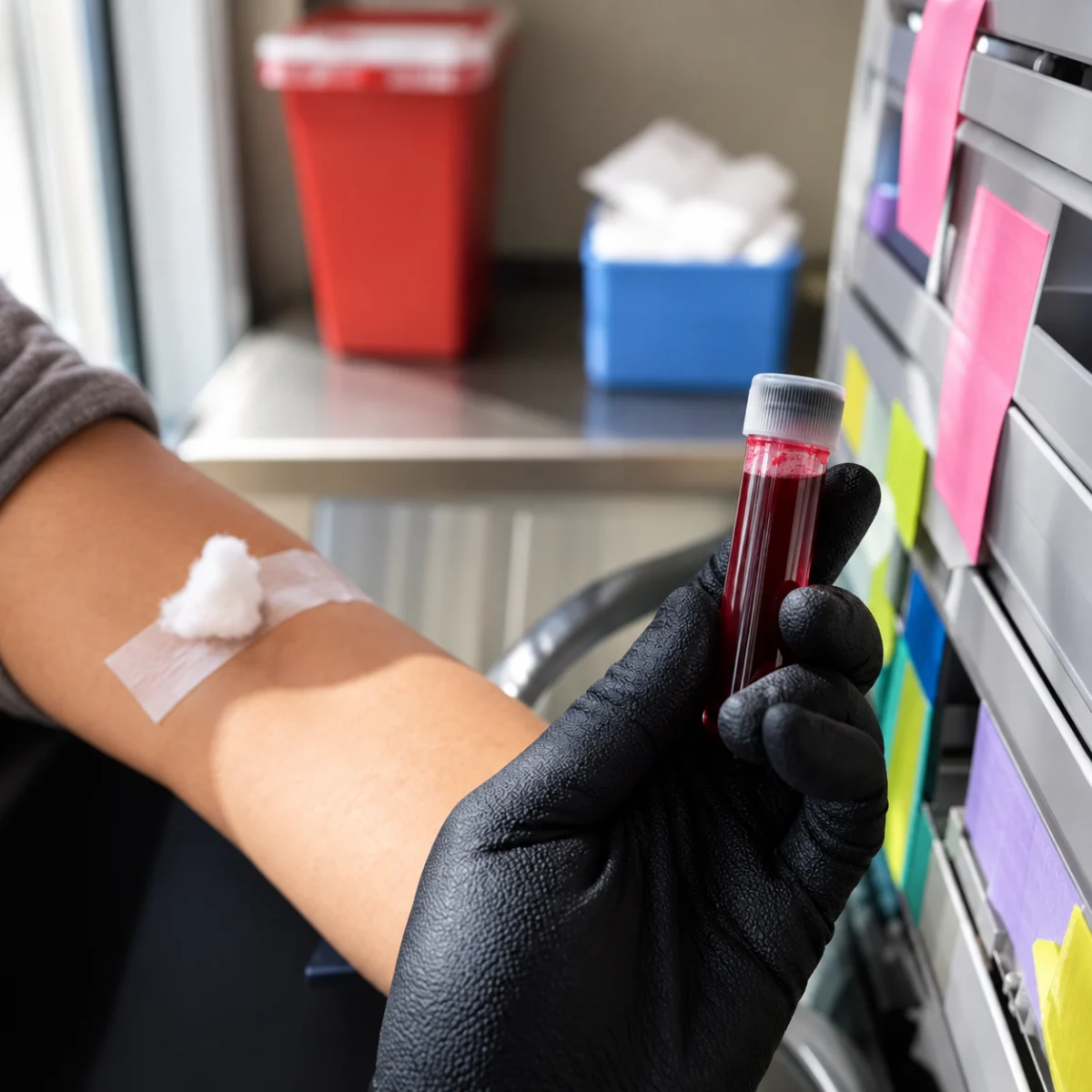
Here’s something you don’t hear enough in medicine: not every visit needs a blood draw. We turn down lab work all the time. If you came in with a sprained ankle, a rash that’s clearly contact dermatitis, or a simple medication refill, drawing a tube of blood tells us nothing useful. It just costs you money and leaves you with a sore arm.
Same goes for repeat testing too soon. Say your cholesterol came back borderline six weeks ago and you started eating better. Rechecking now won’t show much. Lipid panels need about three months to reflect real change, so we’d rather see you in the spring than run the same panel twice and hand you two numbers that mean the same thing.
And sometimes the answer is simply to wait.
A lot of the fatigue complaints we see in July and August around Tampa aren’t thyroid or anemia at all. They’re dehydration and heat. Working outside in Florida humidity will flatten anybody. Before we order a full workup, we’ll ask about your water intake, your sleep, your caffeine. Nine times out of ten the story gives us the answer, not the tube.
There are also cases where in-house lab testing isn’t the right tool for the question. Certain specialty genetic panels, some rare autoimmune markers, and tissue biopsies go to outside reference labs because that’s where the equipment lives. We’ll tell you straight when that’s the case and roughly how long results take, instead of pretending everything happens in the back room.
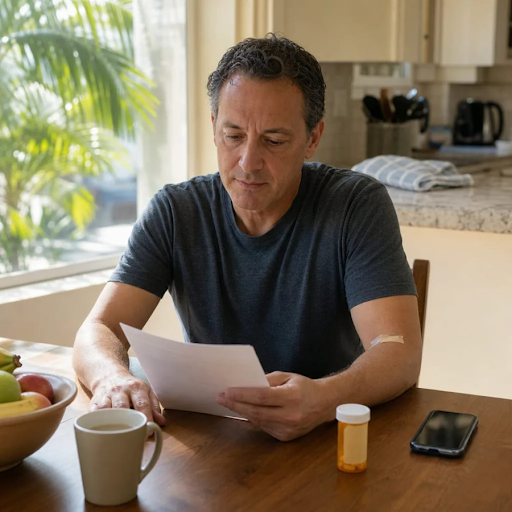
One more honest note. If you’ve already had bloodwork done somewhere else in the last few months, bring the report. We can read it. No sense repeating a metabolic panel because the paperwork didn’t follow you – that happens more than it should.
A test should answer a question. No question, no test.
How to Prepare for Your Lab Visit
Most of the time, prep is simple. A few tests need a little planning, though, and getting that part wrong is the number one reason a patient has to come back. We see it every single week. Someone grabs a sweet coffee on the way in, then their sugar and cholesterol numbers read high for no real reason.
So here’s what matters before you come in.
- Ask us when you book whether your test needs fasting. Lipid panels and fasting glucose usually do. Most other blood work doesn't.
- If you're fasting, stop eating 8 to 12 hours ahead. Plain water is fine and helps.
- Drink water anyway. Tampa heat pulls fluid out of you fast, and a dehydrated vein is a hard vein to draw from. In summer we tell folks to start drinking the night before.
- Bring your medication list, including vitamins and supplements. Biotin is the sneaky one. It can throw off thyroid and hormone results.
- Wear a short sleeve or something you can push up past the elbow easily.
- Tell us if you've fainted during a blood draw before. We'll lay you down and take our time. No big deal.
Nervous about needles? You’re in good company, and saying so out loud changes how we do the draw.
Take your regular prescriptions as usual unless we specifically tell you to hold one. People skip their blood pressure pill because they think fasting means no medicine, it doesn’t. Just ask if you’re unsure. And if you’ve already eaten and your test needed fasting, say something when you check in. We’d rather move you to another morning than run a test that tells us nothing useful.
Front desk staff can walk through your prep in English, Spanish, or Portuguese if that’s easier. Nothing about your health should get lost in translation.

What Happens During and After Your On-Site Blood Draw
Most folks are surprised by how fast it goes. You’re not being sent down the road to a separate draw station. The draw happens in the same building where we just talked about your symptoms, so nothing gets lost between the visit and the vial.
Here’s the order of things on a typical visit:
- We go over why we're testing. You should be able to say out loud what question the blood draw is answering.
- We confirm fasting. If you ate breakfast and the panel needs fasting, we'll tell you straight and reschedule that piece instead of running a number we can't trust.
- The draw itself. Usually one or two tubes, under five minutes. A little pressure, a little tape, done.
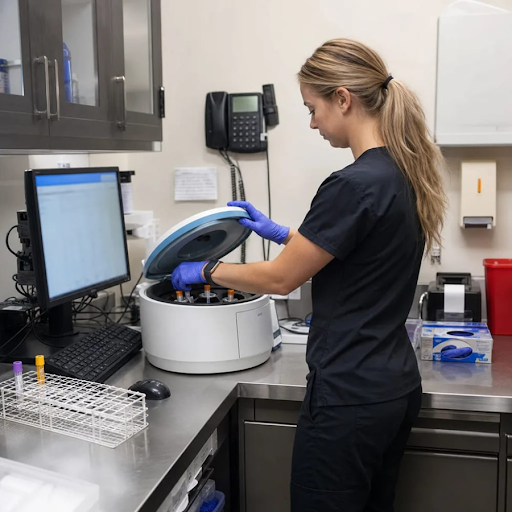
- We label and log everything at the point of care, while you're still in the room.
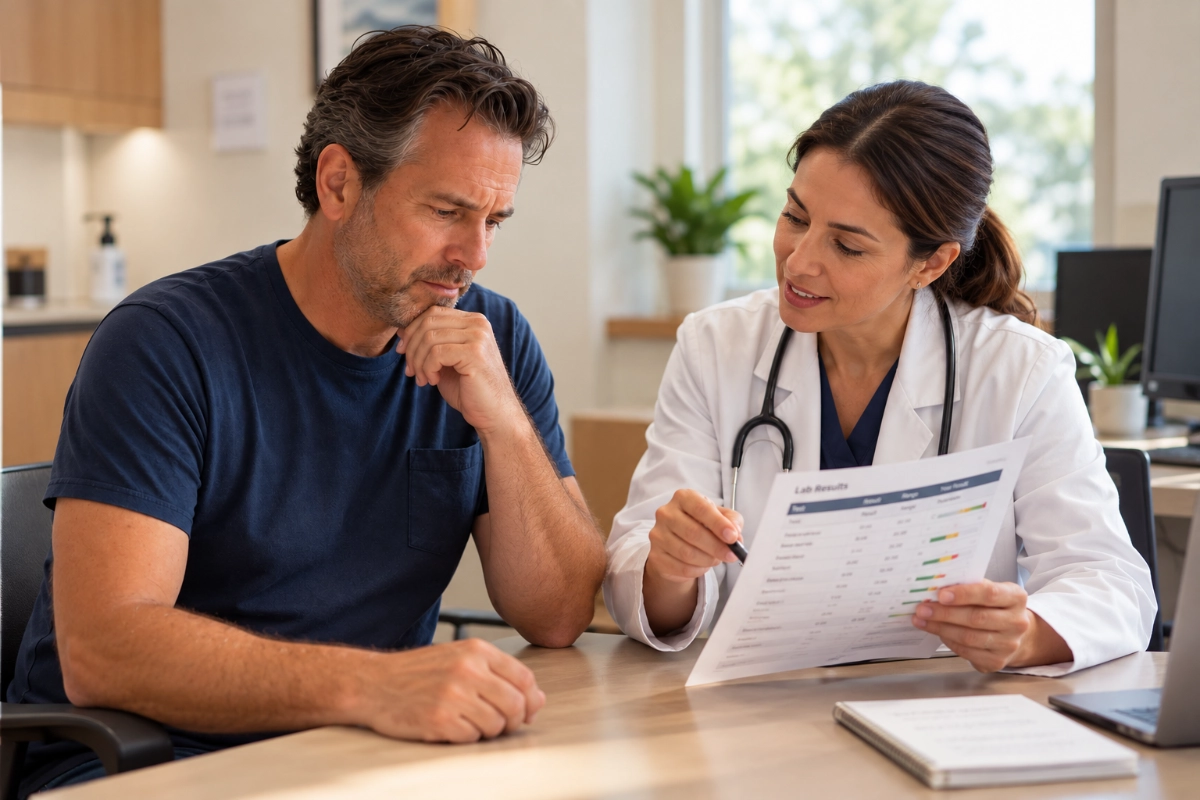
- Results come back and we contact you to walk through them in plain language, not a screen full of numbers you have to decode.
Some results are quick. Others take a bit longer depending on the panel.
And this is the part patients tell us matters most – somebody explains it. A borderline A1c isn’t a verdict, it’s a starting point. A low iron number means we go looking for why. Results can be explained in English, Spanish, or Portuguese, so you hear them in the language you think in. That’s not a small thing when the words are about your health.
Summer here is rough on hydration, and dehydrated patients are harder to draw from. If your visit lands in July or August, drink plenty of water the day before. It makes the stick easier and keeps some values from reading off.
Bruising happens sometimes, it usually fades in a few days. Call us if it doesn’t.
It depends on the test, so always ask when you book. Lipid panels and fasting glucose usually need 8 to 12 hours without food, but plain water is fine. Most other blood work doesn't need fasting at all, so we'll tell you exactly what to do for your specific test.
We draw your blood in the same room where we talked about your symptoms, so there's no second waiting room. Same staff, same chair, and results go straight to the clinician who already knows your chart. This means your follow-up conversation can start with what the numbers mean, not with re-explaining your history.
No, not every visit needs one. A sprained ankle, a rash, or a simple medication refill usually doesn't call for lab work. We'll only order testing when it answers a question about your health, not just as a routine add-on.
It depends on the test. Most in-house panels come back quickly since the draw and reading happen right here on N Himes Ave. Some specialty tests, like rare genetic panels or biopsies, go to outside reference labs, and we'll tell you upfront roughly how long those take.
Yes, it can, especially with fatigue complaints in July and August. A lot of tiredness we see in patients working outside in Florida humidity turns out to be dehydration, not a thyroid or anemia problem. We'll ask about your water intake and sleep before ordering a full workup, since the story often points us to the answer faster than a test tube can.
Bring your medication list, since it changes which panels make sense for you. If you've had bloodwork done elsewhere in the last few months, bring that report too, so we don't repeat a test you already had. A quick call ahead about fasting rules also saves you a second trip.
Why E&Y Medical Clinic Rehabilitation Center Stands Out for In-House Lab Testing
Complete your necessary diagnostic testing right where you consult with your practitioner, eliminating the need to travel to an external facility.
Your diagnostic findings flow directly into your ongoing care plan, allowing your medical team to review data and discuss next steps more efficiently.
Experience routine specimen collection and testing in a calm, professional medical office located right here in Tampa, FL.
- Service Areas
Convenient Diagnostic Testing Across Tampa
Patients throughout the local area turn to E&Y Medical Clinic Rehabilitation Center for accessible on-site diagnostic evaluations during their healthcare visits. Centrally located at 6718 N Himes Ave Ste B, Tampa, FL 33614, our facility provides a professional setting for individuals looking to complete necessary medical tests close to home.
- Tampa
- Egypt Lake-Leto
- Greater Carrollwood
- West Tampa
- Town 'N' Country
- North Tampa
- Citrus Park
- Lake Magdalene
- Temple Terrace
- University
If you are looking for a reliable in-house lab in Tampa, our clinical team is ready to help coordinate your testing and support your ongoing wellness plan. Contact us today through our website at https://eyrehabclinic.com or visit our clinic to schedule your visit.
- Contact Us
Take the next step toward streamlining your diagnostic care by filling out our simple form to receive your complimentary estimate. Button Text: Request Free Estimate